
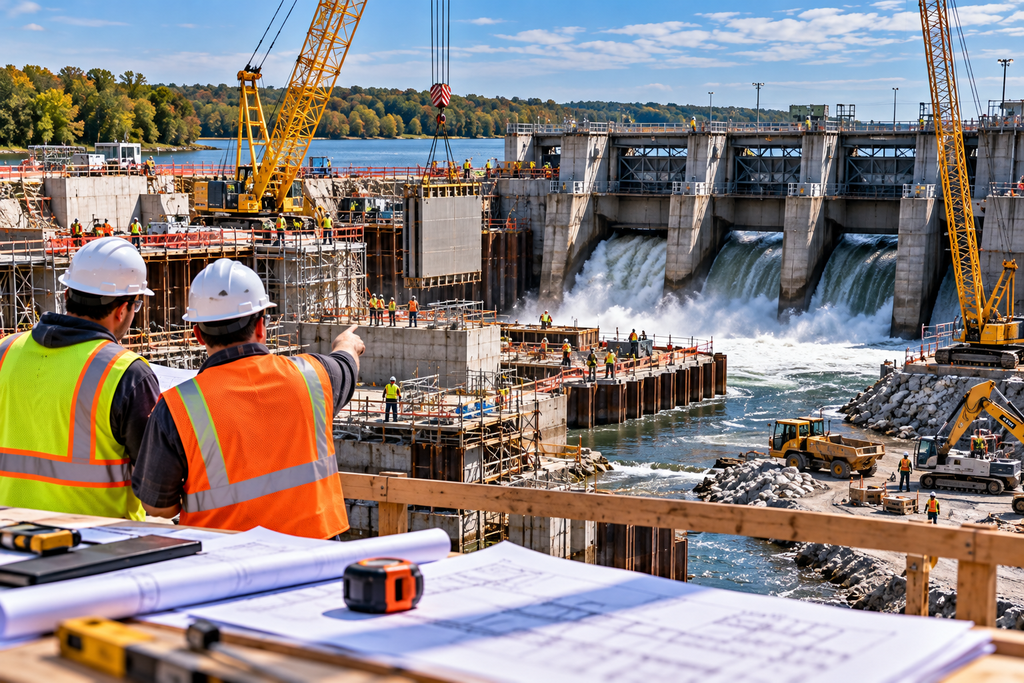
Michigan’s Four Lakes dam reconstruction program continues to advance, offering an important example of the technical, financial, and environmental challenges facing heavy civil contractors. During an October 7 project update, the Four Lakes Task Force reported that reconstruction and restoration efforts remain within the program’s $398.8 million cost cap, despite weather-related delays and construction challenges. Secord Dam is approaching substantial completion in November 2026, with its concrete spillway work completed and crest gates installed. Meanwhile, construction continues at Edenville Dam, where crews are working on primary spillways and control buildings while managing water flow around active construction areas. The Edenville project is targeting substantial completion in 2027, with lake restoration anticipated in spring 2028.
One of the most significant lessons from the project involves the management of specialized equipment, quality control, and construction delays. The Secord Dam reconstruction encountered a quality issue involving manufactured crest gates that required the equipment to be returned to the manufacturer, repaired, and reinstalled. Although that issue has been resolved, it demonstrates how defects involving specialized structural components can disrupt construction sequencing and create additional costs. Weather has also affected project expenses, with September costs exceeding earlier estimates. For Michigan contractors involved in bridge construction, marine work, excavation, concrete structures, and water infrastructure, these developments reinforce the importance of evaluating supplier reliability, maintaining detailed inspection records, and clearly defining responsibility for defective materials and schedule extensions.
The insurance implications of complex water infrastructure projects are equally significant. Contractors working near dams, rivers, and active waterways may face exposures involving flooding, erosion, equipment damage, environmental contamination, and structural failure. Standard general liability and property policies may not adequately address every exposure associated with these operations. Contractors should review whether specialized coverage, such as contractors pollution liability, professional liability for design responsibilities, or additional equipment protection, is appropriate for their specific work. Contracts should also establish clear procedures for documenting changed conditions, weather-related delays, and manufacturer defects. Michigan’s ongoing dam reconstruction demonstrates that successful heavy civil construction requires more than technical expertise—it demands careful financial planning, comprehensive risk transfer, and consistent oversight throughout every phase of construction.
Source: Midland Daily News — October 8, 2026