
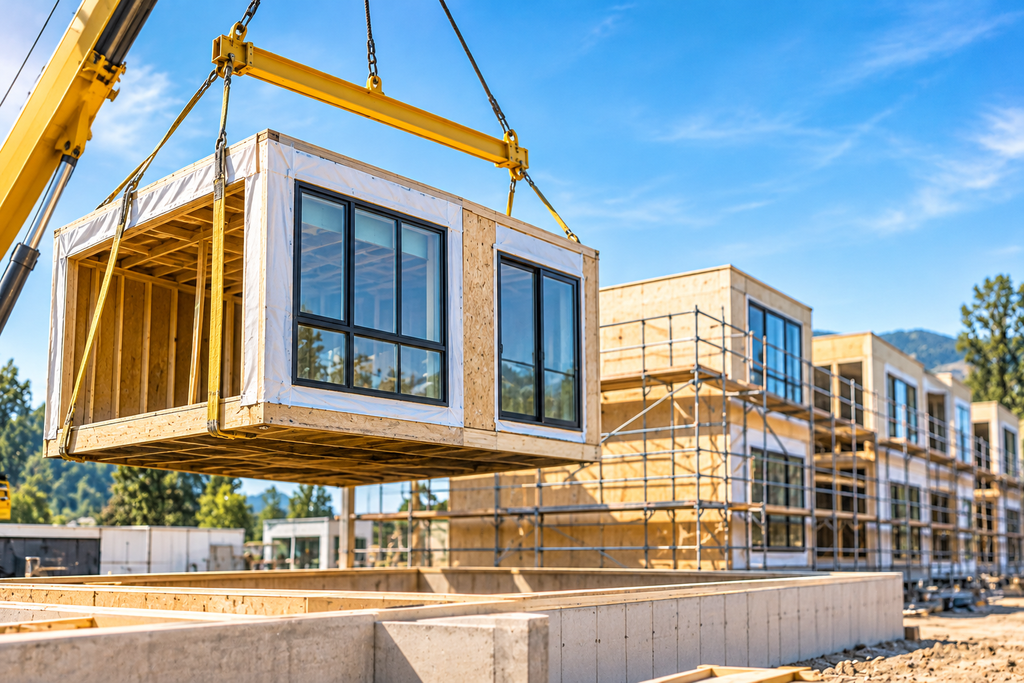
California is increasing its investment in innovative housing construction methods as the state works to address housing shortages and rising development costs. On November 2, 2026, the California Strategic Growth Council announced an additional $9.14 million in grants supporting factory-built housing initiatives, building upon $10 million awarded earlier in August. The funding will support initiatives involving wildfire-resilient designs, workforce housing, and mass timber construction. These developments reflect California’s growing interest in alternative building methods that could help accelerate housing production and create new opportunities for manufacturers, general contractors, transportation companies, and installation specialists.
While modular and factory-built construction may offer advantages in scheduling and efficiency, these projects also introduce insurance considerations that differ from traditional construction. Materials and completed building components may be exposed to damage during manufacturing, temporary storage, transportation, and crane-assisted installation. Contractors should carefully evaluate when responsibility for materials transfers between manufacturers, transportation providers, and installation contractors. Builders risk, installation floater, inland marine, commercial auto, and general liability coverage should be reviewed to identify potential gaps, particularly when multiple parties are involved in transporting and assembling prefabricated structures.
As factory-built housing continues gaining attention throughout California, contractors should ensure their insurance policies reflect the actual scope of their operations. Clearly defined contractual responsibilities, appropriate coverage for materials in transit, and coordinated installation safety procedures can help businesses take advantage of emerging construction opportunities while limiting unnecessary risk.
Source: California Strategic Growth Council, November 2, 2026.