
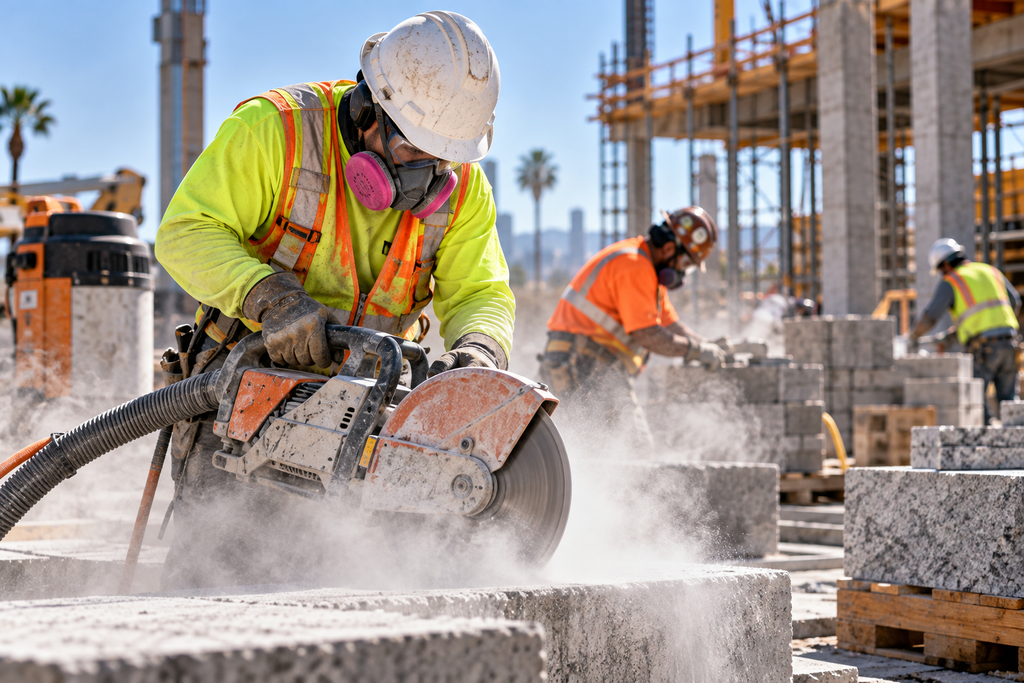
California construction businesses that perform concrete cutting, masonry work, demolition, drilling, and stone installation face increasing pressure to demonstrate effective silica dust controls. On September 9, 2026, Cal/OSHA published updated guidance outlining California’s respirable crystalline silica requirements and the serious health risks associated with exposure. Silica dust is generated when workers cut, grind, drill, or disturb materials containing crystalline silica, including concrete, brick, mortar, and certain stone products. Prolonged exposure can cause silicosis, an incurable lung disease, as well as lung cancer and other serious health conditions. California’s construction silica standard, Title 8 Section 1532.3, establishes requirements for controlling these exposures, including work practices, respiratory protection, employee training, and written exposure control plans.
One of the most important considerations for contractors is understanding the difference between having safety equipment available and demonstrating that appropriate controls are actually being implemented. California’s permissible exposure limit for respirable crystalline silica is 50 micrograms per cubic meter of air, measured as an eight-hour time-weighted average. For construction activities covered by Table 1 of Section 1532.3, employers who fully and properly implement the specified engineering controls, work practices, and respiratory protection are not required to conduct separate exposure monitoring for those tasks. Contractors performing activities outside Table 1 may need to conduct exposure assessments and implement alternative controls. This makes equipment selection, dust suppression, employee training, and documentation particularly important for concrete cutting crews, demolition contractors, and masonry subcontractors.
The regulatory focus also extends to engineered stone fabrication and installation. California has established additional protections for certain high-exposure tasks involving artificial stone and other silica-containing materials. These requirements can include wet cutting methods, enhanced respiratory protection, medical surveillance, and specific housekeeping procedures. Contractors should carefully determine which standards apply to their operations, since general industry requirements under Section 5204 and construction requirements under Section 1532.3 are not interchangeable. From an insurance and risk management standpoint, inadequate silica controls can create exposure to regulatory penalties, occupational illness claims, project interruptions, and potentially significant long-term liabilities. California contractors should review their written silica exposure control plans, verify that employees are properly trained, and confirm that subcontractors follow applicable dust-control procedures. Addressing these issues before work begins can help reduce preventable illnesses while protecting the business from costly operational and legal consequences.
Source: California Department of Industrial Relations / Cal/OSHA, Respirable Crystalline Silica Standards and Resources, September 2026