
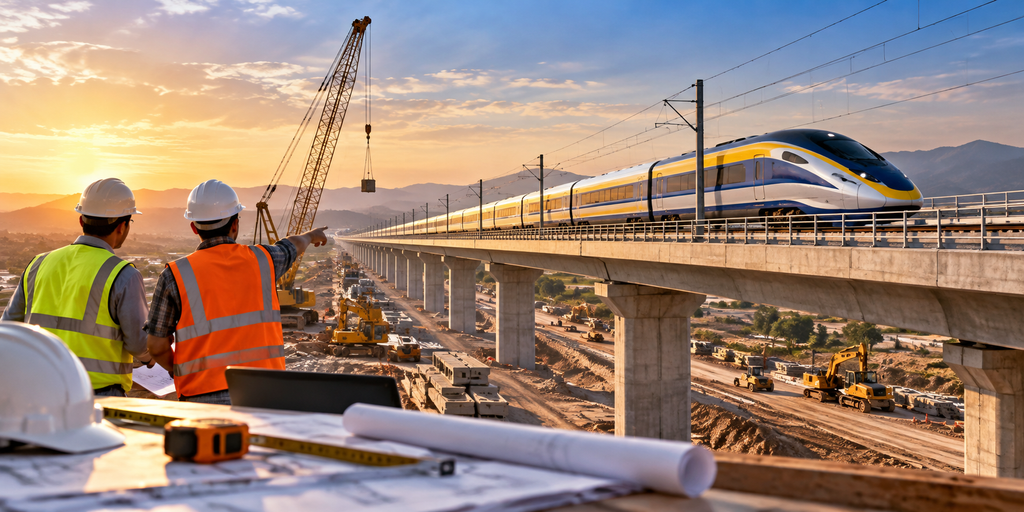
California’s high-speed rail project continues to advance, creating significant opportunities for construction companies specializing in heavy civil construction, concrete, structural steel, earthmoving, crane operations, and infrastructure development. On October 7, 2026, the California High-Speed Rail Authority announced the completion of four additional structures in Kings and Tulare counties, bringing the total to 66 completed structures along the first 119 miles of the project. Eight structures have been completed in 2026 alone. The Authority also estimates that the completed structures will contribute to approximately $466 million in safety benefits over the next 30 years. This progress demonstrates that major infrastructure work remains active in California’s Central Valley, even as contractors navigate rising operating costs and complex public project requirements.
For California contractors, the importance of this milestone extends beyond the immediate construction activity. Large transportation projects require extensive coordination among general contractors, specialized subcontractors, equipment providers, and material suppliers. Companies involved in bridge construction, structural concrete, grading, utility relocation, and heavy lifting may find opportunities through future contract packages or subcontracting relationships. However, contractors interested in participating should carefully evaluate qualification requirements, bonding capacity, prevailing wage obligations, and project-specific insurance requirements before submitting bids. Public infrastructure projects frequently involve strict scheduling expectations, extensive documentation, and contractual responsibilities that can create financial exposure when not properly managed.
Another consideration is the potential impact of project delays, equipment breakdowns, and subcontractor performance on profitability. Contractors working on complex infrastructure projects should review their commercial general liability, workers’ compensation, commercial auto, equipment coverage, and umbrella liability policies to identify potential gaps. Performance and payment bond requirements should also be evaluated early in the bidding process. The opportunity for California construction businesses is substantial, but success depends on disciplined bidding, strong safety practices, and a clear understanding of contractual risk. Contractors who prepare their financial, operational, and insurance programs before pursuing major infrastructure contracts will be better positioned to compete as additional work becomes available.
Source: California High-Speed Rail Authority, October 7, 2026.